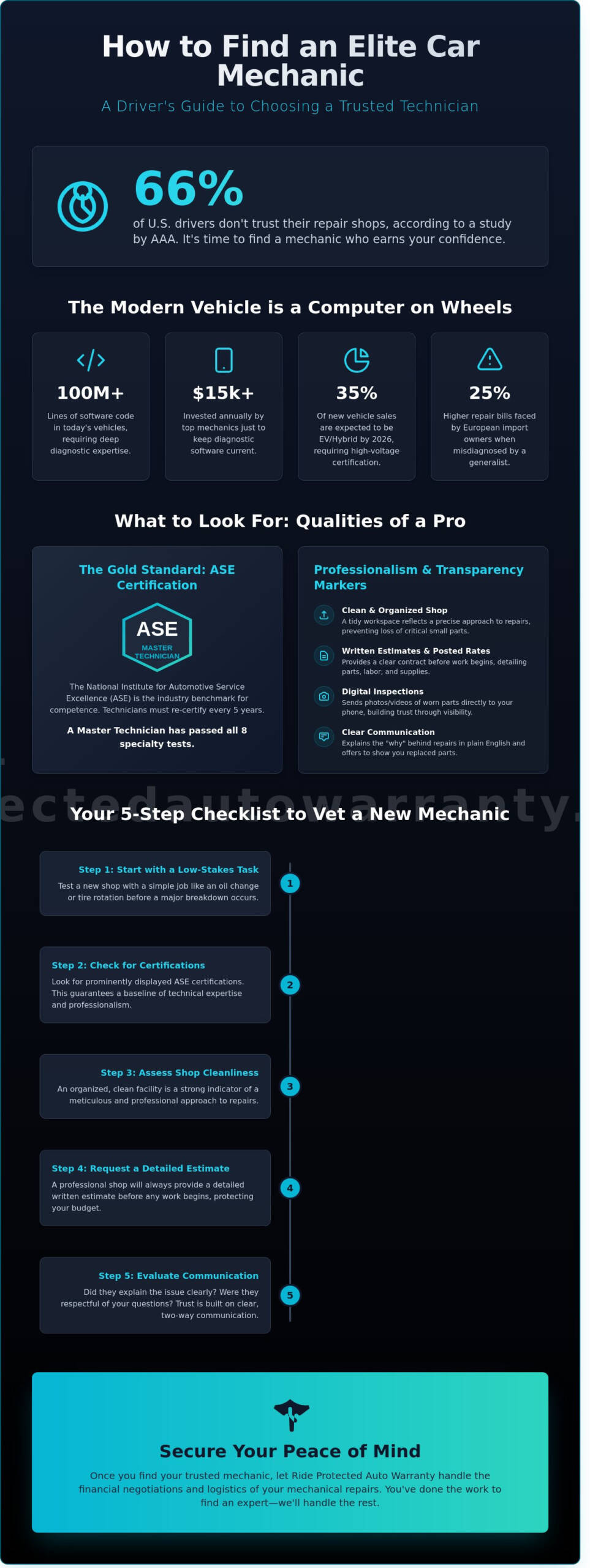
A recent study by AAA found that 66% of U.S. drivers don’t trust their local repair shops. This lack of confidence stems from years of confusing jargon and invoices that feel more like ransom notes than professional services. Your vehicle is a major investment that deserves a high level of defense, yet finding a reliable car mechanic often feels like a gamble where the house always wins.
We understand that you want more than just a quick fix; you want peace of mind. You deserve to know that your safety is in expert hands and that you aren’t overpaying for unnecessary repairs. This guide teaches you how to identify elite automotive technicians who treat your car with the respect it requires. We’ll explain the specific certifications to look for and the transparency markers that separate professional partners from predatory shops, ensuring your ride stays protected for years to come.
Key Takeaways
- Identify the shift from traditional repair to high-tech diagnostics to ensure your modern vehicle receives the specialized care it requires.
- Learn the essential credentials and shop standards that help you select a top-tier car mechanic who treats your vehicle as a valuable investment.
- Compare the benefits of independent shops versus dealerships to maximize your savings without sacrificing the quality of your automotive repairs.
- Follow a proven 5-step checklist to vet new technicians with low-stakes tasks, building a trusted partnership before a major breakdown occurs.
- Discover how to secure your peace of mind by letting Ride Protected Auto Warranty handle the financial negotiations and logistics of your mechanical repairs.
Table of Contents
- The Evolving Role of the Modern Car Mechanic in 2026
- Qualities of a Top-Tier Car Mechanic: Beyond the Wrench
- Independent Shops vs. Dealerships: Choosing Your Repair Facility
- How to Vet a New Mechanic: A 5-Step Checklist for Drivers
- Ride Protected: Your Bridge to Hassle-Free Mechanical Repairs
The Evolving Role of the Modern Car Mechanic in 2026
Your vehicle is a major financial investment. In 2026, protecting that asset requires more than a basic toolkit and a set of wrenches. The modern car mechanic has transitioned from a traditional repairman into a high-tech systems analyst. Today’s vehicles often contain over 100 million lines of software code. This digital complexity means a technician must interpret complex data streams rather than just listening for engine rattles. If your car encounters a mechanical breakdown, you need a guardian who understands the digital architecture of your specific ride. This level of expertise ensures your peace of mind and keeps your vehicle on the road for the long term.
Software vs. Hardware: What Your Mechanic Needs Now
Modern Engine Control Units (ECUs) manage everything from fuel injection to advanced driver-assistance systems. A professional car mechanic now invests over $15,000 annually just to keep their proprietary diagnostic software current. Physical tools are now secondary to the tablets used to communicate with your car’s internal brain. Specialized training is also vital. By 2026, roughly 35% of all new vehicle sales are expected to be electric or hybrid. If a shop hasn’t invested in high-voltage safety certifications, they aren’t equipped to handle your modern drivetrain safely or effectively.
Why a Generalist Might Not Be Enough
Basic shops are fine for simple maintenance like tire rotations. When a complex warning light appears on your dashboard, the stakes change immediately. You need a specialist who views your car as a total system. A Diagnostic Technician is a specialized expert who identifies the root cause of a system failure rather than merely replacing the symptoms. For luxury or high-performance models, brand-specific expertise is a requirement. Owners of European imports often face repair bills 25% higher than average if a generalist misdiagnoses a proprietary sensor issue. Choosing the right car mechanic is the first step to ensure you always Ride Protected.
Qualities of a Top-Tier Car Mechanic: Beyond the Wrench
A top-tier car mechanic treats your vehicle as the $48,000 investment it represents. Professionalism starts with the environment. A shop floor covered in oil spills and scattered tools often reflects a cluttered approach to repair. High-quality facilities maintain organized bays and clean workspaces. This precision ensures that small, critical components like gaskets or specialized clips aren’t lost during a complex engine teardown. Before you hand over your keys, look for a posted labor rate and a clear process for generating written estimates. The Federal Trade Commission offers a detailed roadmap on how to choose a repair shop to help you avoid common industry pitfalls.
The Gold Standard: ASE Certification Explained
The National Institute for Automotive Service Excellence (ASE) is the industry benchmark for technical competence. It isn’t a one-time test; technicians must re-certify every 5 years to keep pace with evolving vehicle technology. Ride Protected requires ASE-certified facilities for covered repairs because it guarantees a baseline of expertise. A Master Technician has passed all eight specialty tests in the automobile series, ranging from engine repair to electronic systems. When your ride needs complex diagnostic work, this level of certification is your best defense against “parts swapping” and unnecessary costs.
Communication and Transparency
Trust is built through visibility, not mystery. Modern shops now use digital inspections, sending high-resolution photos or videos of worn brake pads and leaking struts directly to your smartphone. A professional car mechanic explains the “why” behind every suggested repair in plain English. They’ll show you exactly where a component failed and how that failure impacts your safety. Reliable shops also offer to show you the old, replaced parts as proof of work. This transparency ensures you aren’t paying for phantom repairs. If a shop hides behind a counter and refuses to provide a detailed repair order, your investment is at risk. Securing a comprehensive protection plan ensures that when these experts identify a failure, the financial burden doesn’t fall on your shoulders.
A great mechanic also provides a detailed written estimate before any work begins. This document should break down parts, labor, and shop supplies. It acts as a contract that protects both you and the shop. If the final bill exceeds the estimate by more than 10%, a reputable shop will call you for authorization before proceeding. This level of respect for your budget is the hallmark of a true professional.
Independent Shops vs. Dealerships: Choosing Your Repair Facility
Your vehicle is a significant investment that requires a proactive defense strategy. Choosing where to take your car for service impacts both your wallet and your long-term peace of mind. Dealerships and independent shops offer different value propositions. Dealership labor rates often range between $150 and $210 per hour. In contrast, independent facilities typically charge $90 to $130 per hour. This 40% difference in labor costs can save you hundreds of dollars on a single complex repair.
Personalized service is where local shops often lead. You can frequently speak directly to the car mechanic working on your engine. This direct line of communication eliminates the “lost in translation” feeling that occurs at large service desks. While dealerships invest in brand-specific diagnostic computers that cost upwards of $15,000, modern independent shops use high-end universal scanners capable of handling 98% of vehicle software needs. Before you commit to a facility, consult this FTC guide to auto repair to understand your rights regarding estimates and warranties.
When to Choose the Dealership
Safety recalls require a trip to the dealer. Federal law mandates that manufacturers perform recall repairs for free, and only authorized dealerships can clear these records. If you drive a 2024 or 2025 model, factory-trained technicians possess the specific certifications needed for cutting-edge driver-assistance systems. Dealers also provide amenities like shuttle services or loaner cars. These perks ensure your daily routine remains uninterrupted while your investment is being restored to factory standards.
The Case for the Independent ASE Shop
Independent shops thrive on local reputation and repeat business. They offer flexible service options and often suggest high-quality aftermarket parts that cost 25% less than original equipment manufacturer (OEM) components. Every car mechanic at a reputable shop should hold ASE certification to ensure professional-grade results. Ride Protected provides the ultimate security by allowing you to use any ASE-certified facility nationwide. This flexibility means you’re never stranded. If a mechanical breakdown occurs, you choose the trusted local expert you prefer, and we handle the financial burden. This freedom is a core pillar of a worry-free driving experience.
How to Vet a New Mechanic: A 5-Step Checklist for Drivers
Your vehicle is a valuable investment that requires a high level of defense. Handing your keys to a new car mechanic shouldn’t feel like a gamble. You need a partner who prioritizes your security and understands the financial weight of automotive repairs. Use this 5-step checklist to ensure your ride stays protected before you commit to a major service.
- Test with a low-stakes job. Schedule a basic service like an oil change or tire rotation. These tasks usually cost between $45 and $95. This allows you to evaluate their communication, shop cleanliness, and punctuality without risking a major mechanical breakdown.
- Verify professional credentials. Look for the blue ASE seal. The National Institute for Automotive Service Excellence certifies over 250,000 technicians nationwide. Check their Better Business Bureau rating; shops with an A+ grade typically resolve 98% of customer disputes effectively.
- Confirm the warranty policy. A reputable shop stands by its work. Demand a written guarantee that covers both parts and labor for at least 12 months or 12,000 miles. If they won’t put it in writing, they don’t trust their own craftsmanship.
- Check for make-specific expertise. Modern vehicles contain over 1,400 semiconductor chips. Ask if the shop invests in the specific diagnostic software required for your vehicle’s make. A technician specialized in your model will identify issues faster, saving you money on labor.
- Ensure protection plan compatibility. Ask if they’re comfortable working with third-party providers. A professional car mechanic should be willing to speak with claims adjusters to ensure your coverage handles the bill.
Questions Every Owner Should Ask
Knowledge is your best defense against unexpected costs. Ask for the shop’s hourly labor rate. Independent shops usually charge between $90 and $140 per hour, while dealerships often exceed $180. Verify if they use Original Equipment Manufacturer (OEM) parts or high-quality aftermarket alternatives. Finally, confirm that every technician working on your engine holds current ASE certifications to ensure expert-level care.
Spotting Red Flags Early
Trust your instincts if the environment feels off. Be wary of any shop that refuses to provide a detailed, written estimate before starting work. This is a major red flag that often leads to “bill shock” later. Watch out for high-pressure sales tactics. If a technician insists that a non-safety item, like a dirty air filter, is an “emergency,” they’re prioritizing their profit over your peace of mind. A reliable guardian explains the “why” behind every repair.
Don’t let a breakdown drain your savings. Get a free quote today and Ride Protected
Ride Protected: Your Bridge to Hassle-Free Mechanical Repairs
Finding a reliable car mechanic is only half the battle. The other half involves managing the financial impact of a $3,500 transmission failure or a $1,200 alternator replacement. Ride Protected transforms your relationship with your service center into a strategic partnership backed by a comprehensive service contract. We handle the difficult money conversations so you don’t have to negotiate over labor rates or part markups. Your vehicle is a major investment; it requires an active defense against the unpredictable nature of mechanical wear and tear.
We believe in total freedom of choice for every driver. You aren’t restricted to a specific dealership or a limited network of providers. You can take your vehicle to any ASE-certified facility across the United States or Canada. This flexibility ensures that whether you are at home or on a cross-country trip, you have access to professional help without worrying about coverage gaps. We provide the peace of mind that comes from knowing your bank account is shielded from the high costs of modern automotive technology.
How We Work with Your Chosen Mechanic
The claims process is designed to be invisible to you. When your car mechanic identifies a covered issue, the shop calls our claims department directly to authorize the work. We review the estimate and pay the repair facility via corporate credit card for all covered parts and labor. This direct payment system reduces your out-of-pocket stress and gets your vehicle back on the road faster. Ride Protected covers vehicles up to 175,000 miles, ensuring long-term security even as your ride ages.
Protection Beyond the Shop Floor
Our commitment to your security extends beyond the garage. We provide a suite of benefits that keep you moving regardless of the situation:
- 24/7 Roadside Assistance: We provide towing, battery jumps, and lockout services to get you to a repair facility safely.
- Direct Claims Handling: Our team works with the shop to verify repair orders and labor times based on industry standards.
- Trade-in Support: If a repair no longer makes financial sense, our plans can assist with the transition to a new vehicle.
Mechanical breakdowns are inevitable, but financial anxiety doesn’t have to be. We act as your reliable guardian, standing between you and the rising costs of automotive maintenance. Protect your vehicle and your wallet today with a Ride Protected plan.
Secure Your Vehicle Investment for the Road Ahead
Modern vehicle care is about more than simple oil changes; it’s about defending your second largest investment. By 2026, the average car’s complexity will require highly specialized digital skills, making a trusted car mechanic your most important partner. You’ve now got the tools to vet a shop using our 5-step checklist and understand the value of ASE-certified expertise. Even the best maintenance can’t stop every part from wearing out eventually. That’s where we step in. Ride Protected provides a reliable safety net that covers your vehicle up to 175,000 miles. Our plans are honored at any ASE Certified Repair Facility across the country, giving you total freedom of choice. You’ll also get 24/7 Roadside Assistance with every plan for added peace of mind. Take the stress out of the repair shop and keep your budget intact. Get a Free Quote for Mechanical Breakdown Protection and drive with confidence knowing your ride is always defended.
Frequently Asked Questions
How do I find a car mechanic I can actually trust?
Start by checking reviews on platforms like RepairPal or the Better Business Bureau. A 2023 survey found that 65% of drivers rely on word-of-mouth recommendations from friends or family. Look for shops that offer a clear written estimate before any work begins. This transparency protects your investment and ensures you aren’t surprised by the final bill. A reliable shop will always explain the reasoning behind a repair.
Is it better to take my car to a dealership or a local mechanic?
Choosing between a dealership and a local car mechanic depends on your vehicle’s age and the complexity of the repair. Dealerships have specialized diagnostic tools for specific brands, but they often charge 20% more for labor than independent shops. Local shops offer more personalized service and lower overhead costs. Both options are valid as long as they provide a written warranty on their work to ensure your security.
What does ASE certified actually mean for a car mechanic?
ASE certification means the technician has passed rigorous testing by the National Institute for Automotive Service Excellence. To earn this credential, a car mechanic must complete two years of relevant work experience and pass at least one specialty exam. This certification must be renewed every five years to ensure the technician stays current with modern vehicle technology. It provides the professional credibility you need for total peace of mind.
Do car mechanics charge for just looking at the car?
Most shops charge a diagnostic fee that typically ranges from $75 to $150 per hour. This fee covers the time and expensive equipment required to identify a mechanical breakdown accurately. Some shops will waive this cost if you agree to have the repairs performed at their facility. Always ask about the diagnostic rate upfront to keep your budget secure and avoid unexpected expenses during your visit.
Can I use my own mechanic with a Ride Protected service contract?
You can use any licensed repair facility in the United States or Canada with a Ride Protected plan. We don’t restrict you to a specific network because we believe you should choose a professional you trust. Simply provide the shop with your contract details when you arrive. We handle the claims process directly with them so you can focus on getting back on the road without financial anxiety.
What should I do if I think a mechanic is overcharging me?
Request a detailed, itemized invoice and compare the quoted labor hours against industry standards like the Chilton or Mitchell 1 manuals. If the price for a part is 30% higher than the retail average, ask for a justification. You can also contact the state Bureau of Automotive Repair if you suspect fraudulent billing. Having a service contract helps prevent these disputes by setting pre-approved labor rates for your protection.
What are the most common car repairs that a mechanic handles?
Brake pad replacements, battery swaps, and oxygen sensor repairs are the three most frequent tasks shops perform. According to 2024 industry data, brake jobs account for nearly 15% of all non-maintenance visits. These repairs are essential for the safety of your ride. Addressing these issues early prevents a minor fix from turning into an expensive mechanical failure that could threaten your vehicle investment and your safety.
How much does the average car mechanic charge per hour in 2026?
Labor rates in 2026 average between $120 and $210 per hour depending on your location and the shop type. Specialized luxury vehicle technicians often command rates exceeding $250 in major metropolitan areas. These rising costs highlight why protecting your vehicle investment is more important than ever. A service contract locks in your protection against these unpredictable price hikes and ensures your ride stays roadworthy for years to come.